How to Use the Credit Card Interest Formula

Most credit card issuers calculate your interest charge with one formula: average daily balance × daily periodic rate × days in billing cycle = interest charged for the period. Here's what that looks like with real numbers.
Say your average daily balance is $1,200, your APR is 20%, and your billing cycle is 30 days. Multiply: $1,200 × 0.00054795 × 30 = $19.73 in interest for that billing period. That's the common industry formula most issuers use.
| Term | What it means |
|---|---|
| Average daily balance | Sum of each day's balance ÷ days in billing cycle |
| Daily periodic rate (DPR) | APR ÷ 365 (or ÷ 360, depending on issuer) |
| Days in billing cycle | Typically 28–31 days; shown on your statement |
Key Takeaways
The credit card interest formula is: average daily balance × daily periodic rate × days in billing cycle = interest charged, and paying earlier in the cycle is the single most effective way to reduce that charge.
| Point | Details |
|---|---|
| Core formula | Average daily balance × DPR × days in billing cycle equals the interest charged for that period. |
| Pay the full statement balance | Paying in full each month preserves the grace period and eliminates purchase interest entirely. |
| Pay early when carrying a balance | Payments made early in the cycle reduce the average daily balance for more days, cutting total interest. |
| Track promotional APR end dates | Set a reminder 30 days before a 0% intro rate expires to avoid a sudden jump to the standard APR. |
| Metriqahub finance calculators | Metriqahub's free calculators handle APR-to-DPR conversion and average daily balance math instantly at metriqahub.com/finance. |
Table of Contents
- What do APR, DPR, grace period, and compounding actually mean?
- How to calculate credit card interest step by step
- Which issuer calculation method applies to your card?
- Why timing and compounding frequency change what you pay
- How to avoid or reduce credit card interest
- Where to find the numbers on your statement
- Why a calculator beats doing this by hand
- The formula is a planning tool, not a one-time curiosity
- Metriqahub's free finance calculators make this math instant
- Sources
What do APR, DPR, grace period, and compounding actually mean?
APR stands for Annual Percentage Rate. It's the yearly cost of borrowing expressed as a percentage, but your issuer doesn't charge it once a year. Interest accrues daily, so the APR gets converted into a much smaller daily figure before it's applied to your balance. Daily periodic rate (DPR) is that daily figure. According to the CFPB's guidance on daily periodic rates, issuers divide APR by either 365 or 360 depending on their cardholder agreement. A 20% APR divided by 365 gives a DPR of 0.054795% per day. Divided by 360, it's 0.055556% per day. The difference sounds trivial, but it adds up across a large balance. Monthly rate is sometimes quoted as APR ÷ 12, but most U.S. issuers don't actually use a monthly rate to charge interest. They use the daily rate and multiply by the number of days in the cycle, which is why a 31-day billing period costs slightly more than a 28-day one at the same balance. Compounding happens when the interest charged on one day gets added to the balance and then earns interest itself the next day. Many issuers compound daily, meaning your balance grows slightly faster than a simple-interest calculation would suggest. Grace period is the window between your statement closing date and your payment due date, typically 21 days or more under U.S. law. Pay the full statement balance within that window and you owe zero interest on purchases. Carry any balance forward and the grace period disappears, so interest starts accruing on new purchases immediately. Promotional APRs (0% intro offers) suspend interest on qualifying balances for a set period. Once that period ends, the standard APR kicks in on any remaining balance, often retroactively on deferred-interest cards. Check your agreement carefully. Pro Tip: Check your cardholder agreement for the exact divisor your issuer uses: 365 or 360. That single number changes every DPR calculation you do. *How to calculate credit card interest step by step
Follow these steps with your actual statement in hand.
- Find your APR(s). Your statement lists separate APRs for purchases, cash advances, and balance transfers. Each one may differ significantly. Cash advance APRs are often 5–10 percentage points higher than purchase APRs.
- Identify the billing period. Look for the statement closing date and the number of days in the billing cycle. Most cycles run 28–31 days.
- Convert APR to DPR. Divide your APR (as a decimal) by 365. A 22% APR becomes 0.22 ÷ 365 = 0.000602739 per day. If your agreement says 360, divide by 360 instead.
- Compute your average daily balance. Add up your balance at the end of each day in the billing cycle, then divide by the number of days. New purchases increase the balance on the day they post; payments reduce it.
- Apply the formula per balance type. Multiply average daily balance × DPR × days in billing cycle. Do this separately for purchases, cash advances, and any promotional balances.
- Sum the results. Add the interest charges from each balance category. That total should match the "Interest Charge" line on your statement, as U.S. Bank's Interest Charge Calculation guide illustrates.
Worked example with intermediate values
| Days | Balance | Running total |
|---|---|---|
| Days 1–10 | $1,266.67 | $10,000 |
| — | $1,500 (purchase posted mid-cycle) | $15,000 |
| Days 21–30 | $1,300 (payment posted late cycle) | $13,000 |
Which issuer calculation method applies to your card?
Not every issuer uses the same method, and the Citi guide on credit card interest makes clear that the method used materially affects the total interest charged. Four methods appear most often.
Average daily balance is the most common. The issuer tracks your balance each day, averages those figures across the cycle, and applies the DPR to that average. This is the method in the worked example above. Daily balance method applies the DPR to each day's actual balance rather than an average, then sums those daily charges. If your balance fluctuates a lot, this can produce a slightly different result than the average daily balance method. Daily compounding is more likely under this approach. Previous balance method uses the balance at the start of the billing period, ignoring any payments or purchases made during the cycle. Payments you make mid-cycle don't reduce the interest charge at all, which tends to cost borrowers more. Adjusted balance method subtracts payments made during the cycle from the opening balance before calculating interest. It's the most borrower-friendly of the four, though it's rare among major U.S. issuers today.The method your issuer uses is disclosed in your cardholder agreement, usually under "How We Calculate Your Balance." If you can't find it there, it will appear in the Interest Charge Calculation section of your monthly statement. Knowing which method applies is the first step to accurately predicting your charges.
Statements also break interest down by category. Purchases, cash advances, and promotional balances each carry their own APR and their own interest line, so the total interest charge is actually the sum of several separate calculations.
*Why timing and compounding frequency change what you pay
Paying earlier in your billing cycle directly reduces your average daily balance, and a lower average daily balance means lower interest. The math is straightforward: every dollar you pay on day 5 instead of day 25 removes that dollar from 20 days of daily balance calculations instead of just 5.

A quick contrast: if you owe $1,500 and make a $500 payment on day 3 of a 30-day cycle, your average daily balance drops significantly compared to making that same payment on day 28. The total payment is identical. The interest is not.
Daily compounding amplifies this. When an issuer adds each day's interest charge to your running balance, the next day's interest is calculated on a slightly larger number. Over a single billing cycle the effect is small, but across months of carrying a balance it compounds into a meaningful extra cost. Metriqahub's compound interest calculator lets you model exactly how daily compounding stacks up over time.

The 365 vs. 360 divisor also matters more than it looks. That's $1.14 per month, or roughly $13.68 per year on a single card. Across multiple cards or higher balances, the gap widens.
Pro Tip: Make any extra payment as early in the billing cycle as possible. Even a partial payment on day 2 or 3 reduces the average daily balance for the entire remaining cycle. *How to avoid or reduce credit card interest
- Pay the full statement balance every month. This preserves the grace period on purchases and eliminates interest entirely. The CFPB notes that the grace period generally does not apply if you carry a balance forward.
- Pay early if you're carrying a balance. Two smaller payments spread across the first half of the cycle beat one large payment at the due date when your goal is minimizing average daily balance.
- Track promotional APR end dates. Set a calendar reminder at least 30 days before a 0% intro period expires. Any remaining balance flips to the standard APR on that date.
- Calculate balance-transfer costs before committing. Transfer fees typically run 3%–5% of the transferred amount. Run the math: if the fee exceeds the interest you'd save during the promotional period, the transfer isn't worth it.
- Set up automatic payment alerts. Most issuers let you schedule alerts when your balance crosses a threshold. Use them to trigger early payments before interest accrues on large purchases.
Where to find the numbers on your statement
Your statement contains every number the credit card interest formula needs. Here's where to look.
APR table: Usually near the bottom of the statement under "Interest Charge Calculation" or "Account Summary." It lists the APR for each balance type: purchases, cash advances, balance transfers, and any promotional rates. Match each APR to the correct balance before calculating. Days in billing cycle: Shown near the statement closing date, often labeled "Number of Days in Billing Cycle" or derivable from the statement open and close dates. Balance subject to interest: The "Interest Charge Calculation" section shows the balance the issuer actually used for each category. This is the figure to plug into the formula, not your current balance or your statement balance. Multiple APR categories: If you've made cash advances alongside regular purchases, the statement will show separate lines for each. Calculate interest for each category independently, then add them together, as U.S. Bank's knowledge base demonstrates with its step-by-step issuer example.The "Interest Charge Calculation" section of your statement is the single most useful field for understanding your charges. It shows the balance subject to interest, the DPR applied, and the number of days used — all three inputs the formula requires.Pro Tip: Screenshot or save the Interest Charge Calculation section each month. If your APR changes (variable rates adjust with the prime rate), you'll have a record of which rate was applied when. *
Why a calculator beats doing this by hand
Manual arithmetic on the credit card interest formula is error-prone, especially when you have multiple balance categories with different APRs. A single decimal-place mistake on the DPR conversion changes the result enough to misread your statement.
A dedicated interest calculator needs four inputs: your APR (or APRs if you have multiple balance types), the number of days in your billing cycle, your daily balances or average daily balance, and the balance category. A calculator returns $22.89 in seconds and eliminates rounding errors from manual DPR conversion.
Stepwise verification matters because issuers do occasionally apply the wrong APR to a balance category, especially after a rate change or a promotional period ends. Running the calculation yourself gives you a number to compare against the statement total.
*The formula is a planning tool, not a one-time curiosity
Most people look up the credit card interest formula once, after getting a surprise charge on a statement. That's understandable, but it's the least useful way to apply it.
The real value comes from running the calculation before you carry a balance. That number changes how you think about the purchase, the timing, and whether an early partial payment makes sense.
Pairing the formula with a simple monthly habit makes it practical. Check your balance around day 10 of your billing cycle. If it's higher than you'd like, make a payment then rather than waiting for the due date. Two small payments early in the cycle consistently outperform one large payment at the deadline when the goal is reducing average daily balance interest.
The formula isn't complicated. What takes discipline is using it regularly enough that it actually shapes your repayment decisions.
*Metriqahub's free finance calculators make this math instant
Running the credit card interest formula by hand is a useful exercise once. After that, you want a tool that handles the DPR conversion, the average daily balance calculation, and the multi-category summing without manual arithmetic.
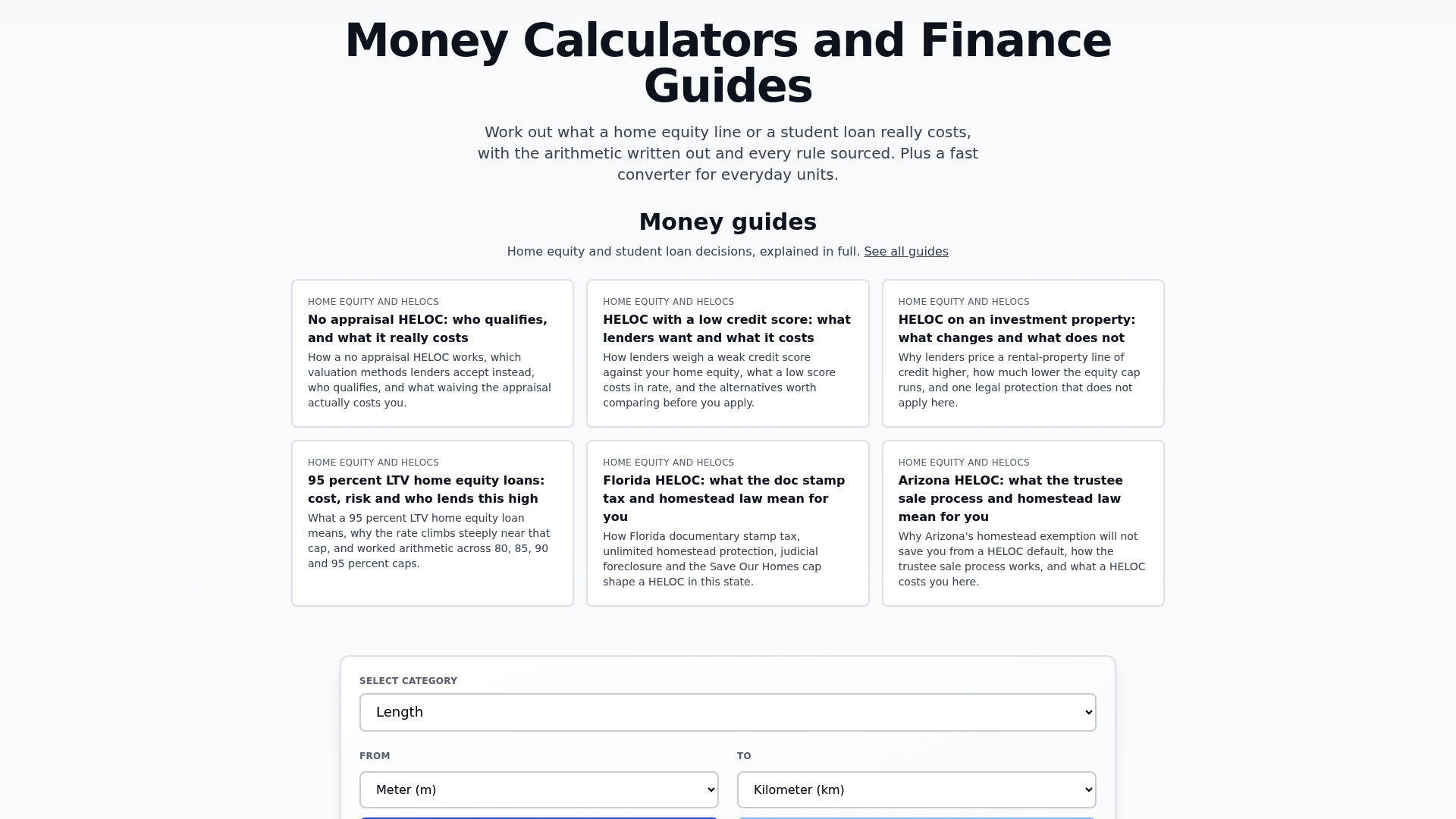
Metriqahub's finance calculators handle exactly that. Enter your APR and the calculator converts it to a daily periodic rate automatically, whether your issuer uses a 365-day or 360-day divisor. Input your daily balances or average daily balance, select your billing period length, and get the interest charge for each balance category instantly. No account required, no waiting, and the rounding matches what your issuer's statement shows. For readers comparing credit card interest to structured loan costs, the loan payment calculator sits on the same platform. Head to Metriqahub to run your numbers now.
*Sources
- How to calculate credit card interest | Capital One
- What is a daily periodic rate on a credit card? | Consumer Financial Protection Bureau
- How is the interest calculated on my credit card account? | U.S. Bank knowledge base
- How credit card interest is calculated | Bankrate
- How to calculate credit card interest | Citi